
Floating Light Bulb Safety: 6 Failure Modes Buyers Should Audit
Floating light bulb safety is not a single feature, and it is not a badge on a box. It is the sum of what a levitating lamp does when power, heat or alignment stops behaving as designed.
Most buyers meet this topic after a sample has already charmed a showroom. The questions that decide a roll-out arrive later, during a night shift, a power cut or a crowded counter.
This guide treats the subject as an audit problem rather than a marketing claim. You will get six failure modes, four bench tests and a checklist you can send to any supplier before a purchase order.
What Does Floating Light Bulb Safety Actually Cover?
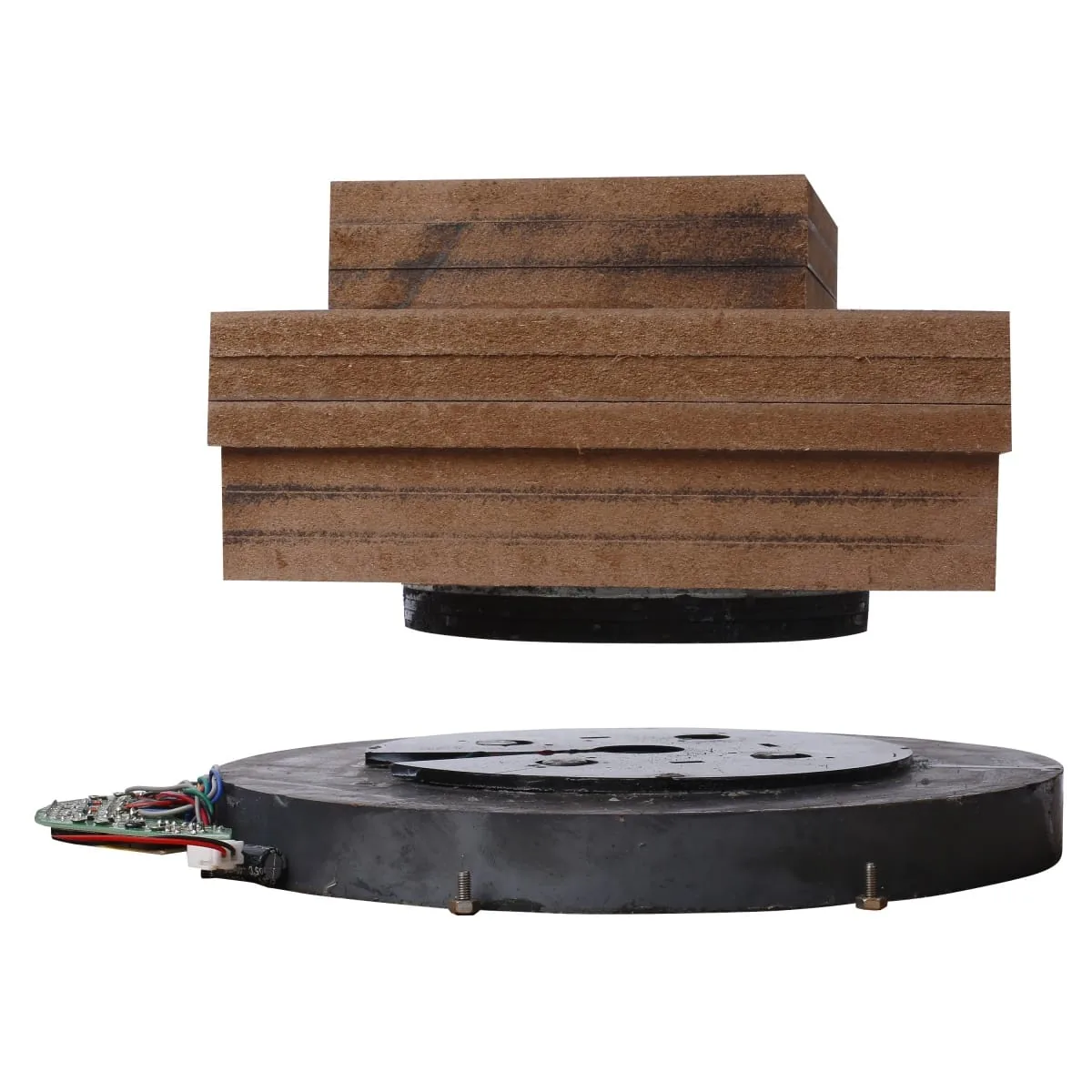
A floating lamp combines three systems inside one object. A coil pushes the load upward, a control loop holds the air gap steady, and a light source adds heat right next to both.
Safety therefore spans mechanics, magnetics, thermal behaviour and electrical supply. A product that manages only the first two is a demonstration, not a display fixture you can leave running.
Most catalogues describe the gap and the maximum load. Very few describe what happens to the load in the moment the coil stops receiving commands.
Which Failure Modes Matter Most in Daily Operation?
Six modes account for almost every field complaint we see across retail installations. Each one leaves a different signature, so each one needs a different question in the audit.
1. Power Loss
When mains power disappears, the magnetic field collapses within milliseconds. A safe design catches the load, then holds it until power returns or a technician reaches the unit.
Ask for the measured fall distance rather than the word catch. A 12 mm gap carrying 2,000 g behaves very differently from a 20 mm gap carrying 300 g.
2. Overheating
Coils and drivers generate heat continuously, even when the load is light. Temperature rise depends on duty cycle, ambient air movement and how much copper sits in the winding.
Look for a stated thermal limit together with the ambient temperature that produced it. A limit quoted without an ambient condition is a number without a meaning.
3. Coil Detuning and Alignment Drift
Ferrite or steel objects near the base shift the resonant point of the coil. A lamp that ran quietly on a glass shelf can chatter on a steel counter two metres away.
Suppliers should publish the detuning margin and the recovery behaviour together. Without both values, an installer cannot predict how the unit will behave on a new fixture.
4. External Magnetic Fields and Metal Objects
Speakers, card readers and thick steel plates all disturb the field. So do keys, watches and cutlery that visitors leave on the base between demonstrations.
The practical test is placement, not theory. Move a phone and a steel ruler toward the base and watch whether the floating gap stays quiet or starts to chatter.
5. Mechanical Contact and Off-Center Loads
A visitor touches the bulb, or a colleague sets the load slightly off axis. The controller must recover the gap without oscillation and without ejecting the object.
Off-center loads are the ordinary case in retail, not an accident. A 5 mm offset on a 2,000 g load happens several times a day in a busy store.
6. Supply and Adapter Mismatch
Many failures begin at the wall socket rather than inside the lamp. A 110 V adapter on a 220 V line, or an undersized supply, damages the driver before anything floats.
Confirm the input range, the adapter rating and the plug type for every destination market. Then confirm the same three details again on the unit you actually receive.
How Does the Levitation Gap Change the Safety Envelope?
Gap is the variable that connects safety to appearance. A wider gap looks more dramatic, yet it asks the coil for more current to hold the same mass in the air.
Modules typically work somewhere between 12 mm and 20 mm, depending on the load class. That range is a system figure, not a promise for every finished product.
Higher current means more heat at the winding and more stress on the driver. A product that floats at 20 mm with a heavy load needs a larger base and a better thermal path.
Our gap design variables guide explains how load mass, coil diameter and control bandwidth trade against each other. Read it before you fix a gap figure for a new fixture.
Why Does Overheat Protection Sometimes Drop the Bulb?
This is the detail most specification sheets hide. When a driver protects itself by cutting coil current, the levitation field disappears along with the current.
The load falls immediately, and the customer sees a drop rather than an orderly shutdown. In that moment the protection circuit has worked exactly as designed, and the display has still failed its only job.
A thermal shutdown suits a sealed driver box bolted to a wall. It does not suit a device whose entire purpose is to hold an object in the air above a counter.
The engineering answer is a controlled landing path. Reduce coil current gradually, let the load settle onto a compliant stop, and keep the light alive on a separate rail.
A lamp that treats overheating as a reason to release the load has no safety strategy. It has a self-protection strategy, and the customer pays the difference.
How Can Buyers Test Floating Light Bulb Safety Before Scaling?
Four bench tests cover the modes above, and each takes under an hour. You need a steel ruler, a stopwatch, a contact thermal probe and a variable power supply.
T1: Power Cut and Catch
Run the unit at rated load for 30 minutes, then cut mains power at the socket. Record fall distance with a ruler and repeat the cut ten times.
A pass means the load stays within 3 mm of its floating height on every attempt. No visible oscillation should follow the catch, and the light should stay on through the cut.
T2: Thermal Soak at Duty Cycle
Operate continuously for eight hours at 25 °C ambient and log base surface temperature every 30 minutes. The target is a stable plateau below the declared limit.
We treat a rise above 18 °C at the base centre as a warning sign for long-duty retail use. That figure assumes the same 25 °C ambient used in the test, so a warmer store needs a lower threshold.
T3: Detuning Sweep
Place a steel plate 100 mm from the base, then step it inward in 20 mm increments. Note the distance at which the gap first begins to oscillate.
A unit that holds a stable gap until the plate reaches 40 mm has usable margin for counters with metal fixtures underneath. Anything that stumbles at 80 mm will struggle in a real store.
T4: Off-Center Load Release
Shift the load 5 mm off axis, then 10 mm, releasing it from rest each time. The gap should recover within two seconds without ejecting the object.
Beyond 10 mm, most single-coil designs need a wider base or a different control strategy. Ask which of the two your supplier actually ships, and test it with your own load rather than theirs.
Which Installation Habits Cause Most Field Failures?
Installation errors repeat across stores, and most of them are avoidable. The common thread is a fixture that was never checked against the base requirements.
Placing the base on a steel shelf is the first. Sealing it inside a closed plinth without vents is the second, and both raise coil temperature within an hour.
Draping fabric over the base is the third. Textiles trap warm air and block the small convection path that keeps a passively cooled winding inside its limit.
Sharing a circuit with refrigeration is the fourth. Compressor cycling produces voltage dips that the driver reads as a command to reduce current, so the gap sags each time a compressor starts.
A short commissioning sheet removes most of these risks. Record the shelf material, the ambient range and the circuit the unit shares before the first customer arrives.
What Should a Supplier Audit Checklist Include?
Send this list with the first sample request. A supplier who answers in writing is far easier to audit than one who answers during a friendly call.
- Rated gap range, stated per load class instead of as one figure.
- Measured fall distance after a mains cut, with the test load and gap.
- Base surface temperature at 25 °C ambient after eight hours of duty.
- Detuning margin in millimetres, tested with a steel plate at a stated distance.
- Recovery behaviour after a 10 mm off-center release.
- Adapter input range and plug type for every destination market.
- Certification documents for the destination market, including certificate scope.
- Spare coil and driver part numbers, plus the recommended replacement interval.
None of these lines is exotic, yet each one replaces an adjective with a measurement. You can repeat every item in your own workshop within a single afternoon.
How Do Certified Components Fit Into the Picture?
Certification covers the electrical and material side of the product. It does not cover the levitation behaviour, because no standard yet describes a floating lamp.
Treat CE, RoHS and FCC documents as the entry ticket for a market. Then use the bench tests above for the part no certificate can describe.
That split is useful during procurement. Compliance files travel quickly between departments, while thermal and recovery data usually need a short conversation with an engineer.
Where Does a Brand Fit Into This Audit?
Brand names answer a different question. They tell you who has already met these modes at scale, not whether the unit in front of you has.
Goodwell is one example of a supplier that documents gap, load class and protection behaviour per product family. That structure makes the checklist above answerable from a single document.
Treat every brand the same way, including this one. Ask for the measurements first, then decide whether the answer is credible enough to scale across a chain.
Related reading on power behaviour sits in our power outage protection breakdown. The full module range, including gap and load options, is listed on the levitation module page.
For electrical safety context in the destination market, the US electrical safety guidance published by OSHA is a reasonable starting reference. It covers wiring and supply practice rather than levitation behaviour.
Frequently Asked Questions About Floating Light Bulb Safety
Is a floating bulb safe to leave running overnight?
Yes, when the base has a declared thermal limit and a controlled landing path. Ask for the eight-hour surface temperature at your ambient before leaving a unit unattended.
What happens if someone touches the bulb while it floats?
A compliant controller restores the gap within roughly two seconds. A design without contact handling may eject the load instead, so test a light touch before installation.
Do metal shelves under the base affect safety?
They can shift the resonant point and reduce the usable gap. Test with a steel plate at the real installation distance, not on the wooden bench in your office.
How do I verify floating light bulb safety claims?
Request measured values with the test conditions attached. A claim without a load, a gap and an ambient temperature cannot be compared with another supplier.
Which documents should I keep after commissioning?
Keep the thermal log, the fall-distance record and the adapter rating for each site. Those three files shorten every future service call and every warranty discussion.
Our product FAQ covers the questions stores ask most often in the first month. It also explains how gap figures are quoted for custom builds.
Send Your Fixture Details for a Gap and Thermal Review
Send the installation drawing and the load specification to our engineering team on WhatsApp. You will get a gap and thermal recommendation for the exact fixture you plan to build.
WhatsApp: +86 134 5018 0012. Send the fixture drawing and the load mass in the same message so the team can reply with numbers rather than guesses.
Email works too, at [email protected]. Include the base surface material and the ambient temperature range if you already know them, and the reply will be more specific.