Choosing a Magnetic Levitation Manufacturer: What to Look for in Expertise and Patents
Magnetic levitation products are deceptively hard to source.
On the surface, two suppliers can show you similar-looking “floating” demos. But once you move from a cool prototype to a shippable product—stable levitation, acceptable noise, heat management, consistent performance across units, safe failure behavior, and market compliance—the gap between suppliers becomes obvious.
This guide is designed for buyers who are still early in the process. You’re not trying to pick le manufacturer today—you’re trying to avoid the expensive mistakes that show up later: unstable levitation in the field, high return rates, compliance headaches at the port, or a supplier that can’t support customization once you commit to a design.
Below is a buyer-friendly framework you can use to screen, compare, and shortlist a magnetic levitation manufacturer. If your use case is retail or brand activation, you may also see suppliers describe themselves as a magnetic levitation display manufacturer—this guide will help you evaluate those claims with evidence, not buzzwords.
Why sourcing magnetic levitation is different from sourcing “normal” electronics
For most consumer electronics, the core risks are familiar: component quality, PCB assembly, firmware maturity, and standard compliance.
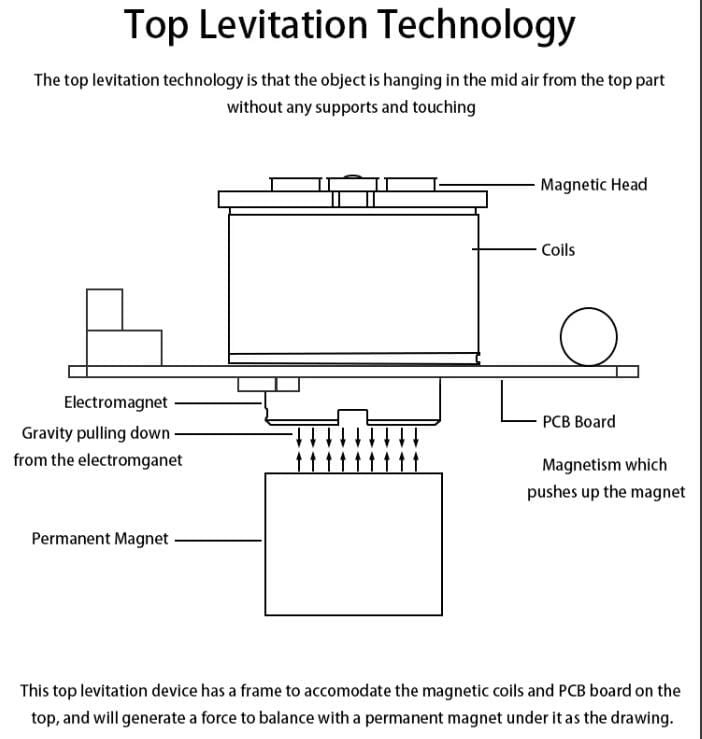
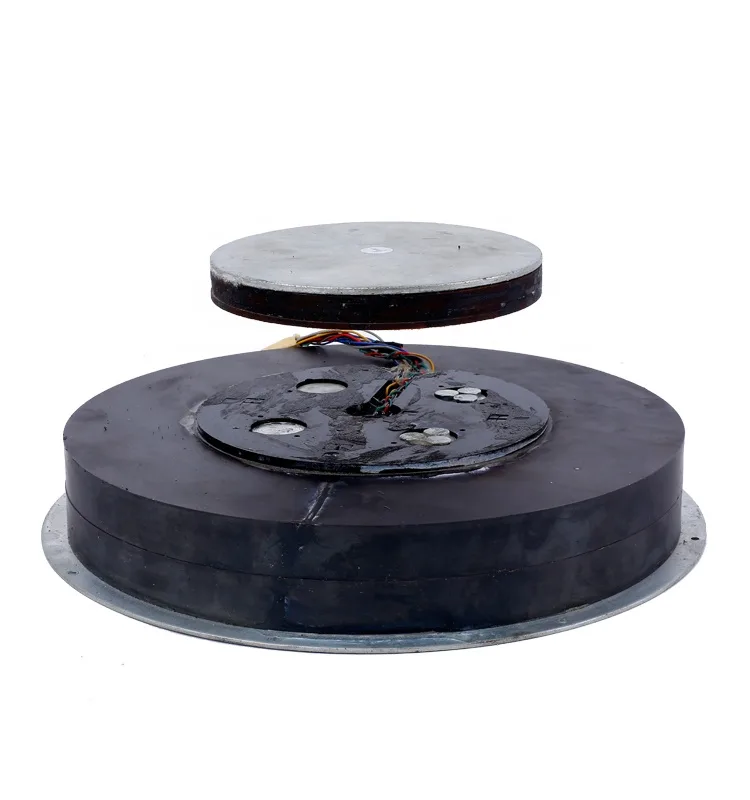
Magnetic levitation adds a new layer: closed-loop control and magnetic tuning that’s sensitive to real-world variation.
Small changes can have outsized impact:
Le payload weight changes by a few grams (paint, coating, internal battery, resin density).
The object’s center of mass shifts slightly (a logo badge, a screw, a different LED board).
The levitation gap needs to increase for visual effect—stability drops.
A different adapter is used—noise and heat behavior change.
That’s why “we can manufacture electronics” isn’t the same as “we can manufacture magnetic levitation products reliably.”
Key Takeaway: You’re not just buying a product—you’re buying a control system that needs to be tuned to your object, your use case, and your compliance target.
Start with a needs assessment (so you don’t overpay—or under-spec)
Before you compare suppliers, define what toi need. Otherwise you’ll end up comparing quotes that aren’t actually comparable.
1) What are you levitating—display, gift, toy, or functional device?
Different applications change what “good” means:
Retail display / advertising: long run-time, low noise, strong visual stability, robust fail-safe behavior.
Cadeau / collectible: visual wow factor, premium finish, packaging, repeatable assembly.
Toy / kids product: safety standards become the main constraint; magnets and small parts can trigger strict requirements.
Functional device: reliability testing and thermal performance move to the top.
2) Define your payload, tolerance, and center-of-mass constraints
Ask engineering to provide:
target weight (grammes)
acceptable weight tolerance (± grams)
approximate center-of-mass location (or at least “centered / off-center”)
whether the payload rotates (motor) or stays static
If you don’t have this yet, you’re not ready for a final quote—but you are ready to screen suppliers by how they react to uncertainty.
A strong levitation manufacturer will ask these questions early, because they determine stability and control parameters.
3) Decide whether you need wireless power to the floating object
If your floating object includes LEDs, le logo, or a motor, you’ll likely need wireless power transfer from the base to the floating platform.
That changes the technical risk: the system now includes power transfer efficiency, heat dissipation, and the robustness of the receiving circuitry under real-world orientation drift.
4) Define your real operating conditions
Magnetic levitation demos are usually filmed in ideal conditions. Your customers won’t use them in ideal conditions.
Document:
ambient temperature range
expected run-time (minutes, heures, continuous)
surface stability (countertop, retail fixture, moving environment)
whether the unit must withstand frequent “hands-on” interaction
Expertise signals that matter in a magnetic levitation manufacturer
When you shortlist a magnetic levitation manufacturer, you’re really evaluating whether their engineering and process discipline will hold up under real-world variation—not just whether they can make a demo float.
Here are the signals that correlate strongly with success.
Signal 1: They can explain stability like an engineer, not a salesperson
Ask:
What causes instability in levitation systems?
What do you adjust to improve stability: magnet geometry, control loop parameters, sensor selection, mechanical tolerance?
What happens when the payload’s center of mass is off by 2–5 mm?
You don’t need them to share proprietary details. But you do need them to demonstrate they understand the failure modes.
Red flag: Answers like “our technology is advanced” or “we have a patented algorithm” without describing tradeoffs.
Signal 2: They have a clear tuning process (and it starts with your object)
A real manufacturer will talk about tuning as a workflow, not a one-time tweak.
Look for a process that includes:
baseline levitation module selection (payload band + lacune)
sample payload measurement and balancing
magnetic tuning to your object
thermal and run-time validation
iteration when you change materials, finishes, or internal components
If you want a concrete picture of what a levitation-module sourcing and tuning checklist can look like, ce B2B sourcing guide for magnetic levitation modules lays out practical evaluation points like payload capacity, lacune, wireless power needs, and stability validation.
Signal 3: They treat thermal and run-time behavior as first-class requirements
Heat is a quiet killer in levitation products. Systems can work perfectly for 10 minutes and fail after two hours.
Ask what they do to validate continuous operation:
thermal design approach (heat sinks, airflow, component derating)
burn-in / aging test routines (Par exemple, 24–48 hours)
acceptable temperature rise under steady state
failure mode when overheated (does it shut down safely?)
Red flag: They only show short demo videos and have no stability/run-time test data.
Signal 4: They can show evidence of process control (not just prototypes)
Prototypes prove creativity. Production proves discipline.
Ask for:
sample-to-sample stability variance (even informal data is better than none)
how they handle component substitutions
incoming inspection process for magnets, capteurs, and adapters
how they trace a defect back to a lot or supplier
If they can’t answer this, you may be buying a workshop—not a manufacturer.
Patents: how to separate real protection from marketing
When you’re comparing a magnetic levitation supplier, the goal isn’t to be dazzled by big numbers—it’s to verify what’s real, what’s relevant, and what reduces risk for your specific product.
Patents can be meaningful. They can also be used as a vague “trust signal” that buyers don’t know how to evaluate.
Your goal isn’t to become a patent attorney. Your goal is to confirm:
the patents exist,
the supplier has rights to them,
the patents cover what they claim, et
the patent story matches the supplier’s engineering reality.
Étape 1: Ask for specifics (patent numbers, jurisdictions, and the assignee name)
If a supplier says “we have 100+ brevets,” ask for:
a list of patent numbers
the jurisdictions (CN, US, EP, JP, etc.)
le assignee name (the current legal owner)
the status (granted vs pending)
the expiration year (or filing/grant date)
This request alone filters out a surprising number of weak suppliers.
Pour un pourboire: Ask them to highlight their haut 5 brevets that are most relevant to your product—not just a long list. Strong suppliers can explain why those specific patents matter.
Étape 2: Verify patents independently (USPTO, EPO, WIPO)
If you’re selling in the U.S. or evaluating a supplier’s U.S. patent claims, you can verify records using the USPTO’s search tools. The USPTO describes how to use the USPTO Patent Public Search tool to search by patent number, inventeur, or assignee.
A quick buyer workflow:
Search by assignee (company name) and by known patent numbers.
Open the record and confirm the legal owner and key dates.
Check whether it’s granted or still an application.
Spot-check whether the patent is still in force.
For international coverage, ask for a patent family view: related filings across countries that share a priority date.
Étape 3: Know what kind of patent you’re looking at
Not all patents mean the same thing.
Utility patents generally protect how something works (fonctionnalité).
Design patents generally protect how something looks (ornamental design).
Both can be valuable. But if a supplier is claiming unique levitation performance, you’d expect at least some utility patents—or very strong engineering evidence—because design protection alone doesn’t prove functional advantage.
Étape 4: Understand what patents do not guarantee
Even a legitimate patent portfolio does not guarantee:
consistent manufacturing quality
safety and compliance for your target market
that the product won’t infringe someone else’s IP (freedom-to-operate)
that the supplier can support your customization timeline
So treat patents as one input in a larger evaluation system.
Patent-related red flags buyers should take seriously
They won’t provide patent numbers or jurisdictions.
Patents are heavily unrelated to your category (Par exemple, random electronics filings, no levitation relevance).
The “patented” claim is vague, while the engineering answers are thin.
The assignee name doesn’t match the supplier you’re contracting with.
Everything is “patent pending” with no clear granted portfolio.
Quality systems: what to ask for beyond “We’re ISO 9001”
ISO 9001 can be a useful signal that a supplier follows a structured quality management system—but it shouldn’t end the conversation.
Think of it this way: a certificate is a doorway. Evidence is what’s inside the building.
Here’s what to ask for.
1) Incoming inspection (IQC) for magnets, capteurs, and adapters
Ask:
what they inspect on arrival (dimensions, part numbers, magnetic properties where relevant)
how they sample (AQL or risk-based sampling)
what happens to failed lots (segregation + corrective action)
2) In-process and final QC: what gets measured, and how often
For levitation products, the QC plan should include more than “power on/off.”
Ask whether they measure:
stabilité (wobble/drift tolerance)
levitation gap consistency
noise level (if relevant)
thermal rise after a defined run-time
fail-safe behavior during power loss
3) Reliability testing that matches your real use case
At minimum, ask for:
a defined continuous-run test (heures, not minutes)
pass/fail criteria
a record of failures and what changed afterward
4) Traceability and change control
For products that will ship at volume, this matters.
Ask:
whether they can trace issues by lot / production batch
how they notify customers of component substitutions
how they qualify alternates when parts go EOL
If you want a simple way to compare suppliers objectively, the Institute for Supply Management describes how procurement teams use a supplier evaluation matrix that balances quality, delivery, cost, risk, and capability. You can adapt that model to your levitation-specific criteria.
US-market compliance: the questions you should ask early
Compliance problems are expensive because they show up late—often after you’ve already invested in packaging, tooling, and inventory.
So move compliance questions upstream, even in the awareness stage.
FCC: what it is and why you should care
Many electronic devices are regulated under U.S. FCC rules. 47 CFR Part 15 covers regulations for radio frequency devices and sets conditions for operating many RF-emitting devices without an individual license.
For a buyer-friendly reference, le 47 CFR Part 15 — Radio Frequency Devices (eCFR) is the canonical source.
What to ask your supplier:
Which FCC pathway applies to this product category?
Do you have recent EMC/EMI test reports for the final configuration (not just for a similar SKU)?
If the power adapter is included, is it compliant and properly labeled for the U.S. market?
Red flag: “We have FCC” with no test report, lab name, or model-level documentation.
Magnet safety (category-dependent)
Magnet-related safety requirements depend on whether magnets are accessible and how the product is marketed (toy vs adult collectible vs display).
If there’s any possibility the product could be used by children—or magnets could become loose—treat this as a serious diligence area. The CPSC’s magnet safety guidance explains why high-powered magnets can be dangerous if ingested.
What to ask:
Are magnets fully enclosed and not user-accessible?
What drop/impact tests have been run to ensure magnets don’t become loose?
If the product is a children’s product, which toy standards/testing apply?
Materials and substances (RoHS/REACH/Prop 65)
Depending on where you sell (and where your customers sell), you may need substance testing and disclosures.
Ask:
Do you have RoHS test reports (common requirement for global distribution)?
If selling in California, how do you handle Proposition 65 disclosures?
OEM/ODM capability: questions that predict whether the project will go smoothly
Many buyers start by searching for an OEM ODM magnetic levitation partner. The problem is that these labels don’t tell you how the work actually gets done.
What matters is whether the supplier has a repeatable process for tuning, validation, and change control once your floating object design starts evolving.
Most supplier failures aren’t because the factory is “bad.” They’re because expectations are mismatched.
Use these questions to reveal whether the supplier can actually run your project.
1) OEM vs ODM: which model are we using, really?
Define this clearly:
OEM: you provide the design; the factory manufactures to spec.
ODM: the factory provides a base design; you customize and brand it.
Neither is “better.” But ODM projects need clarity on what can and cannot be changed.
2) What does the sampling timeline look like—and what are the acceptance criteria?
Ask for:
sampling stages (prototype → engineering sample → pre-production → production)
what you will measure at each stage
what “pass” means (stabilité, thermal rise, noise, gap)
3) How do you handle customization without breaking stability?
Customization is where levitation projects often fail.
Ask:
what customization they’ve done before (payload range, formes, finishes)
what changes usually require re-tuning
how they validate a new payload design before mass production
4) What is your minimum order (MOQ) by configuration, not by brochure?
Many suppliers list a low MOQ for a standard module, but the real MOQ may change based on:
custom housing
custom packaging
custom PCB
custom adapter
Ask for MOQ and pricing tiers by configuration.
The red flags and deal-breakers (a shortlist you can use today)
If you’re screening suppliers quickly, these are high-signal red flags:
No documentation: they won’t share test reports, certificates, or process details.
Demo-only confidence: everything is based on videos, not production evidence.
Patent vagueness: “patented” with no numbers, no jurisdictions, no assignee.
No tuning language: they don’t talk about payload, center-of-mass, or iteration.
No change control: they can’t explain what happens when a component becomes unavailable.
Compliance hand-waving: “we have FCC/CE” without model-specific documentation.
⚠️ Warning: If you’re hearing vague answers et you’re being pushed to place a large order quickly, slow down. In this category, rushing is a common way to buy yourself a long problem.
A simple scoring model (and RFQ questions you can copy/paste)
If you need a lightweight system to compare suppliers, score each category from 1–5 and weight what matters.
Suggested weights for a first pass:
Levitation performance & stability evidence: 30%
Quality systems & traceability: 20%
Patent/IP credibility: 15%
Compliance readiness (US market): 15%
OEM/ODM project execution: 20%
Copy/paste RFQ questions
You can paste this into an email or RFQ form:
Levitation performance
What payload range (grammes) does this configuration support, and what levitation gap (MM) is typical?
What are the stability specs (wobble/drift tolerance) and how do you test them?
Do you support wireless power to the floating object (LED/motor)? If yes, what is the power capacity?
What continuous run-time tests do you perform (heures) and what is the acceptable temperature rise?
What happens during power loss—how does the system fail safely?
Quality and process control
Do you have ISO 9001? If yes, please share the certificate and scope.
What incoming inspection do you run for magnets, capteurs, and adapters?
What in-process and final QC checks are performed for each unit?
Do you have traceability by lot/batch? How do you handle corrective actions?
What is your change control process for component substitutions?
Patents and IP (verification-ready)
Please provide a list of relevant patents (patent numbers, jurisdictions, status, and assignee name).
Which 3–5 patents are most relevant to this product, and what do they cover at a high level?
Do you have patent family information for US/EU/JP filings?
(If the supplier can’t answer these clearly, it’s a sign your patent verification process is working: you’ve found marketing language instead of verifiable assets.)
Compliance
For the US market, what compliance path applies to this product category?
Can you provide model-level EMC/EMI test reports for the final configuration?
If magnets are accessible, what safety standards/testing apply?
Project execution
What are the sampling stages and timeline? What are the acceptance criteria at each stage?
What is MOQ and lead time by configuration (standard vs customized housing/PCB/packaging)?
What information do you need from us to begin tuning and validation?
Next steps: how to build confidence without overcommitting
If you’re early in the sourcing process, here’s a low-risk path:
Screen suppliers with the RFQ questions above (you’ll eliminate many just on documentation quality).
Request 1–3 samples of the closest configuration.
Run your own stability and run-time checks (even basic tests reveal a lot).
Do a small pilot order before committing to custom tooling or large inventory.
Lock in documentation requirements in writing (test reports, change notifications, acceptance criteria).
If you want, you can also turn the RFQ section into an internal scorecard template your team uses for every supplier evaluation.
FAQ
Do patents prove a manufacturer is the best choice?
Non. Patents can indicate R&D activity and a unique design or method, but they don’t guarantee quality control, compliance, or that the product won’t fail after hours of operation. Use patents as one part of a broader evaluation.
What if a supplier says they have “patent pending” technology?
Treat it as neutral. Ask for application numbers and jurisdictions, and verify what’s actually filed. Then focus on engineering evidence: stabilité, thermal behavior, and repeatability across units.
How many samples should I request?
For early screening, 1–3 samples can be enough to validate basic stability and build quality. If you’re planning customization, request an engineering sample as soon as the payload design is defined.
Do I need to visit the factory?
Not always, but for higher-risk projects or higher volumes, a factory audit (direct or third-party) is often worth it. The goal is to validate process control, QC records, and traceability—not to be impressed by a showroom.
What’s the biggest mistake buyers make in this category?
Over-trusting demos. A stable video doesn’t tell you what happens after two hours of continuous use, after small weight changes, or after production variation. Always ask for evidence and define acceptance criteria.