
2026 Tendances du commerce de détail de luxe: Pourquoi le Kinetic Visual Merchandising est la nouvelle norme pour les produits phares mondiaux
Pourquoi le Kinetic Visual Merchandising est la nouvelle norme pour les produits phares mondiaux
In the hyper-competitive luxury landscape of 2026, la vitrine statique traditionnelle est devenue une relique du passé. Alors que les consommateurs fortunés migrent vers le commerce de détail expérientiel, the industry’s focus has shifted to Kinetic Visual Merchandising (Machine virtuelle)—a discipline that merges high-tech engineering with haute couture aesthetics to capture fragmented human attention.

The Psychology of Motion in Luxury Retail
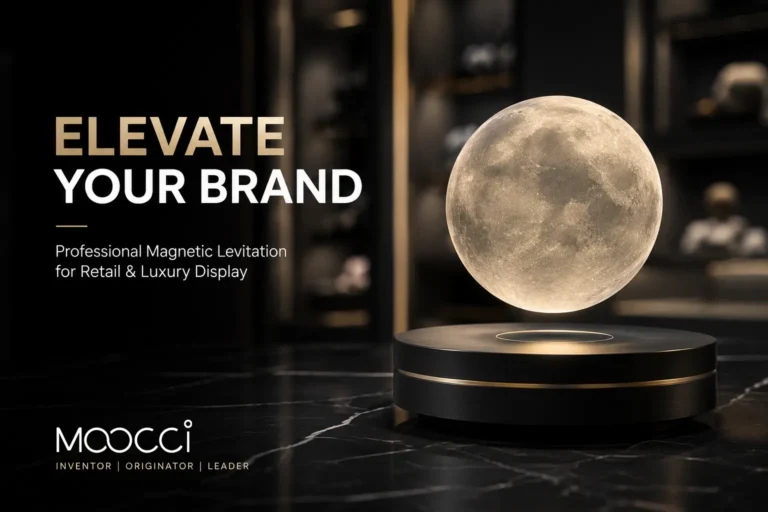
Human neurology is hardwired to detect movement. In a crowded shopping district like the Champs-Élysées or Fifth Avenue, a static mannequin—no matter how well-styled—eventually blends into the architectural background. Kinetic displays, particularly those utilizing industrial magnetic levitation solutions, break this visual fatigue. By suspending a product in a state of “impossible float,” brands trigger a psychological “stop-and-stare” effect. This is not merely a gimmick; it is a strategic tool to increase dwell time and brand recall.
Moocci's 30-Year Legacy in Kinetic Innovation
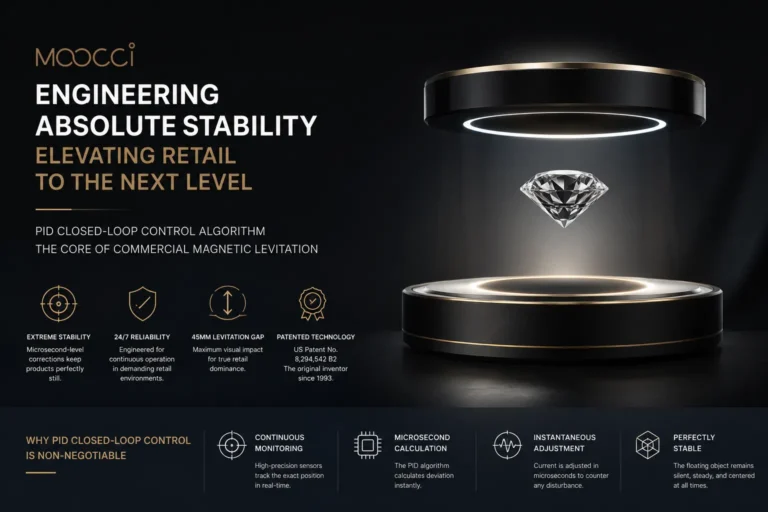
Moocci (Bien), the original pioneer of commercial maglev technology since 1993, has spent three decades perfecting the art of the “stable float”. While many suppliers offer toy-grade levitation, Moocci provides an industrial-grade backbone capable of supporting 5kg+ extreme loads—critical for displaying heavy luxury leather goods, électronique haut de gamme, and even boutique automotive parts.
Strategic Integration: Beyond the Floating Object
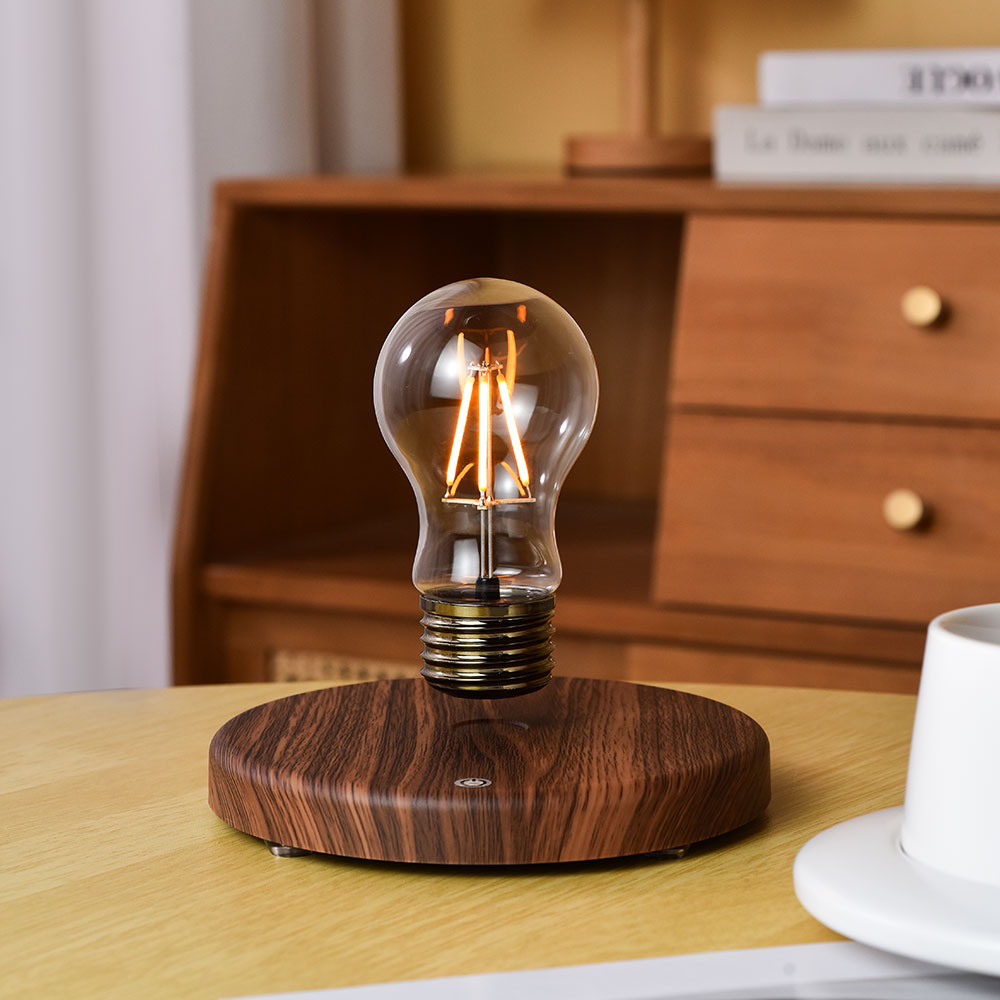
Dans 2026, kinetic VM is being integrated with IoT and smart lighting. Imagine a floating sneaker display that changes rotation speed based on the customer’s proximity, or a levitating watch that syncs its movement with a digital backdrop. Moocci’s technology, soutenu par Numéro de brevet américain. 11,469,024 B2, allows for this level of sophisticated control through advanced PID algorithms, ensuring that the movement remains fluid and silent 24/7.

FAQ: Retail Visual Merchandising & Maglev Tech
- T1: What is the ROI of investing in kinetic magnetic levitation for retail windows?
- UN: Kinetic displays have been shown to increase storefront dwell time by up to 400% compared to static displays. For luxury brands, this translates to higher foot traffic and a significantly stronger “social media shareability” factor, effectively turning a physical store window into a viral digital asset.
- T2: Can Moocci’s maglev modules be integrated into existing store fixtures?
- UN: Absolument. Moocci’s modules are designed for seamless integration. With a 45mm levitation gap and customizable base dimensions, our engineering team works with VM managers to embed the technology into marble pedestals, glass cases, or wall-mounted shelving without disrupting the store’s interior design.
- T3: Is the magnetic field safe for high-end electronics like smartwatches or luxury smartphones?
- UN: This is a common concern. Moocci’s patented design utilizes controlled electromagnetic fields that are focused upward to maintain the float. When configured correctly, the field does not interfere with the internal components of modern electronics, as verified by our CE and FCC compliance testing.