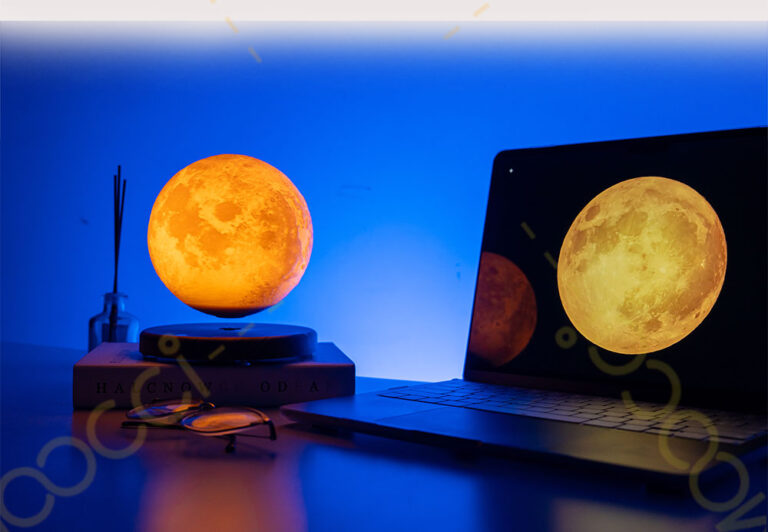
무선 유도 전력 자기 부상: 7 엔지니어링 점검
플로팅 램프의 밝기를 유지하기 위해 숨겨진 케이블이 필요한 경우, 시각적 개념은 시스템으로 설계되지 않았습니다.. wireless induction power magnetic levitation combines levitation geometry with energy transfer, 수신기 정렬, 열적 거동, 및 장애 상태 제어, 따라서 구매자는 하나의 매력적인 샘플이 아닌 전체 운영 범위를 승인해야 합니다..
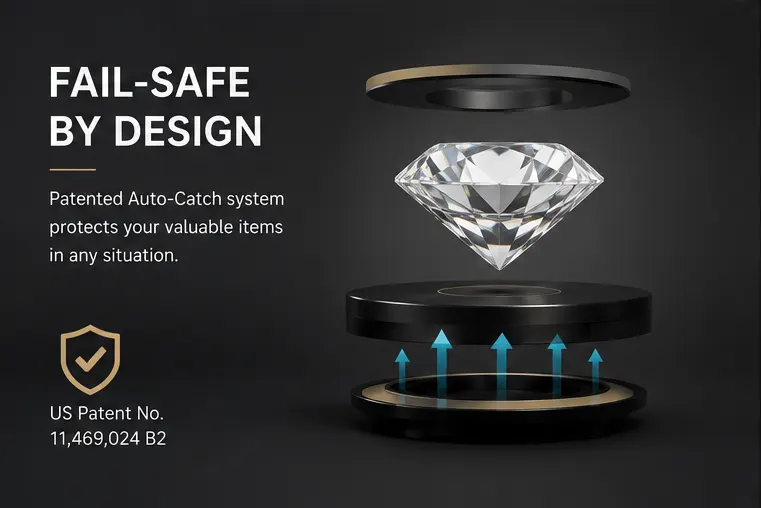
What Does Wireless Induction Power Magnetic Levitation Actually Combine?
Wireless power and magnetic levitation solve different problems. The levitation loop controls position and stability, while the induction path transfers energy across an air gap to a receiver inside the floating product.
The coupling point moves when the payload tilts, the levitation gap changes, or the receiver is not centered over the transmitter. In a commercial design, those movements must be treated as engineering inputs because a visually stable object can still deliver inconsistent electrical output.
Goodwell’s public product material describes floating lighting products with wireless inductive power, while the public module page lists several product-specific levitation gaps. Those public descriptions establish the architecture, not a universal transfer efficiency or temperature limit, which must remain configuration-specific.
| Subsystem | Primary variable | 요청할 증거 |
|---|---|---|
| Levitation | Payload, 갭, 무게중심 | Loaded stability and gap record |
| Transmission | Coil geometry and alignment | Receiver output versus position |
| Thermal | Coil and receiver temperature | Temperature curve at declared runtime |
| Protection | Power loss and restart state | Interruption and recovery test |
| 완성 | Enclosure and optical output | Final assembled prototype approval |
Which 7 Parameters Control Inductive Power Transfer?
첫 번째, transmitter and receiver alignment defines the usable coupling area. A product that rotates or shifts under disturbance may remain suspended while its receiver moves away from the strongest transfer zone.
Second, the levitation gap changes the physical distance between the two assemblies. The public module page shows different gap examples for different configurations, so an RFQ should state the target gap and tolerance instead of copying a number from another product.
Third, receiver orientation matters when the floating object is not rotationally symmetric. Fourth, the electrical load must be stated because a light source, speaker, display circuit, or sensor may draw different power during startup and continuous operation.
Fifth, coil temperature must be measured after the product reaches its intended operating condition. Sixth, the enclosure material and spacing can affect coupling and heat removal, while seventh, the power-loss state must define what happens to both levitation and output.
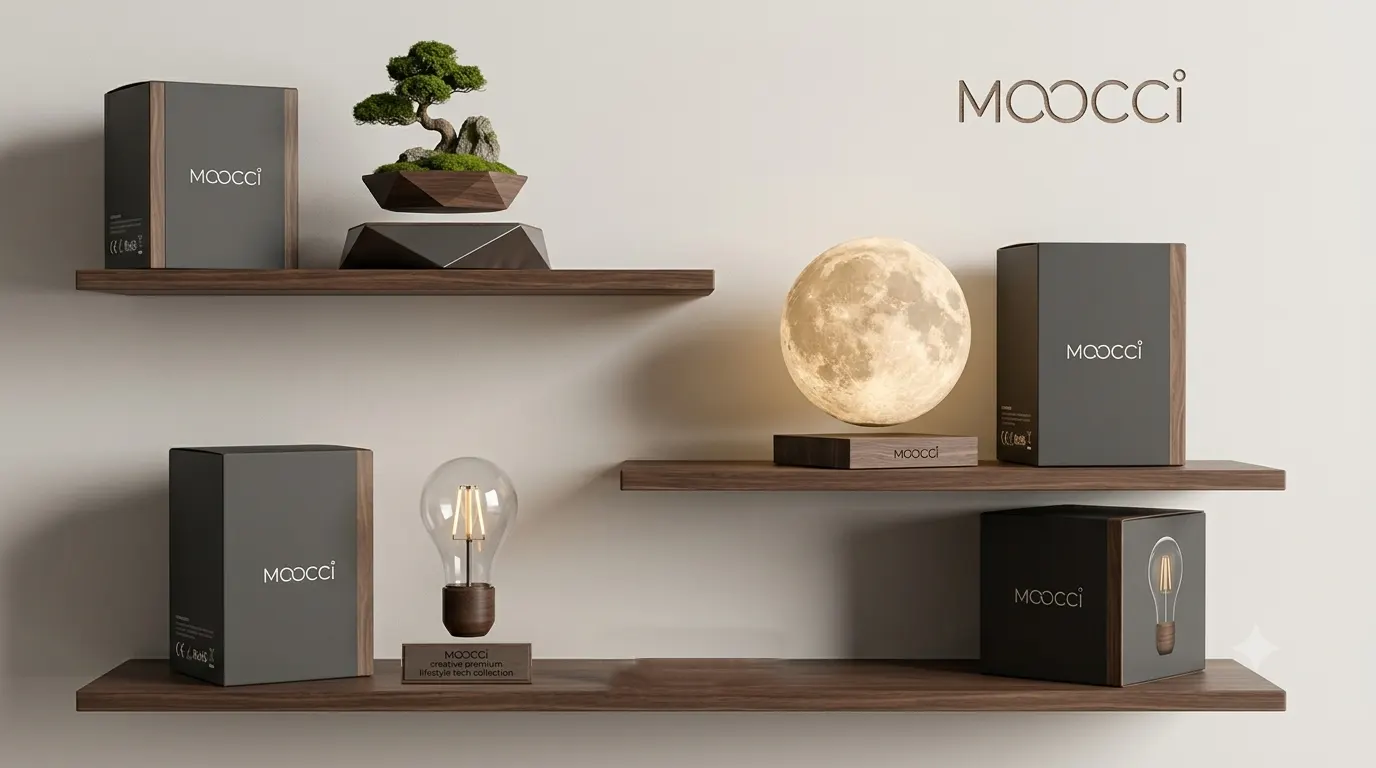
How Should a Buyer Validate Wireless Power in a Floating Product?
Start with the assembled product, not an exposed coil demonstration. Record the module identity, payload mass, 부상 격차, receiver position, input condition, output load, and the measurement method used for electrical and temperature readings.
Run the measurement at the intended unloaded and loaded positions. If the design rotates, record output at more than one angular position because a receiver can show acceptable output at one orientation and a lower margin after rotation.
Repeat the test after thermal stabilization and after a controlled disturbance. The pass condition should state the minimum usable output, maximum permitted temperature, maximum displacement, and whether the system returns to the same operating state after interruption.
- Identify transmitter, receiver, 제어 장치, and prototype revision
- Measure output at nominal and tolerance-limit alignment
- Record levitation gap, 유효 탑재량, and center of gravity
- Repeat after thermal stabilization and controlled disturbance
- Test power interruption, safe landing, 그리고 행동을 다시 시작하세요
What Does Goodwell’s Public Material Verify—and What Remains Open?
Goodwell’s public product pages identify wireless inductive power as a feature in floating products, and the company presents itself as a magnetic levitation manufacturer with a 27,000 m² 공장 이상 100 특허. These are public company and product statements, not substitutes for a project-level electrical test report.
Our engineering brief uses wireless induction powering together with bottom-push levitation and closed-loop control. For a new OEM product, the design brief should therefore capture the receiver envelope, target output, heat path, 울로 둘러싼 땅, visual rotation, 부상 격차, and the required failure state before sampling.
Use the Goodwell Magnetic Levitation Module range to identify the starting hardware family, then review the floating product range for application context. For certification and documentation questions, use the 특허 & Certificate page and request records for the exact configuration.
공급업체 감사 체크리스트: 5 서명 전 요청해야 할 서류
- Wireless power test report: identifies transmitter, receiver, alignment, output load, 실행 시간, and temperature.
- Configuration datasheet: states gap, 유효 탑재량, receiver position, input condition, and operating limits.
- Power-loss and safe-landing record: verifies the object’s failure state and restart procedure.
- Prototype approval sheet: records light output, thermal acceptance, appearance, and mechanical clearance.
- 선적 전 검사 샘플: proves that production units receive the same electrical and levitation checks.
자주하는 질문: 무선 유도 전력 자기 부상
큐: How does wireless induction power work in a magnetic levitation product?
A base-side transmitter creates an alternating electromagnetic field and a receiver converts coupled energy into usable output. The exact transfer depends on coil geometry, alignment, 갭, 짐, and thermal conditions, so buyers should request a configuration-specific test record.
큐: Does wireless induction power mean the floating product has a battery?
아니요. Wireless induction power can deliver energy to a receiver without a visible cable, but it does not prove that every product is battery-free. Ask the supplier to identify the receiver, storage components if any, input condition, and continuous-output test method.
큐: What should be tested before approving a floating light?
The approval test should cover levitation, power transfer, light output, temperature, alignment tolerance, 방해, and power recovery as one system. The report should name the module revision, receiver, 유효 탑재량, 갭, test duration, and acceptance limits.
큐: Can wireless power and levitation be validated separately?
They can be measured separately, but the commercial design must pass an integrated test because receiver alignment and levitation position interact. A supplier should show output and thermal results at the declared gap and payload rather than relying on an unloaded bench demonstration.
If you are developing a floating lamp, bulb, 지구, speaker, or custom illuminated object, send the payload drawing and receiver concept to Goodwell Contact / 자유로운 디자인. 이메일 [email protected] with the target output, 갭, 실행 시간, and failure-state requirements.
For the underlying physics of electromagnetic fields and induction, consult OpenStax Physics. That authority reference explains the physical principles; the assembled product still requires Goodwell’s configuration-specific validation.