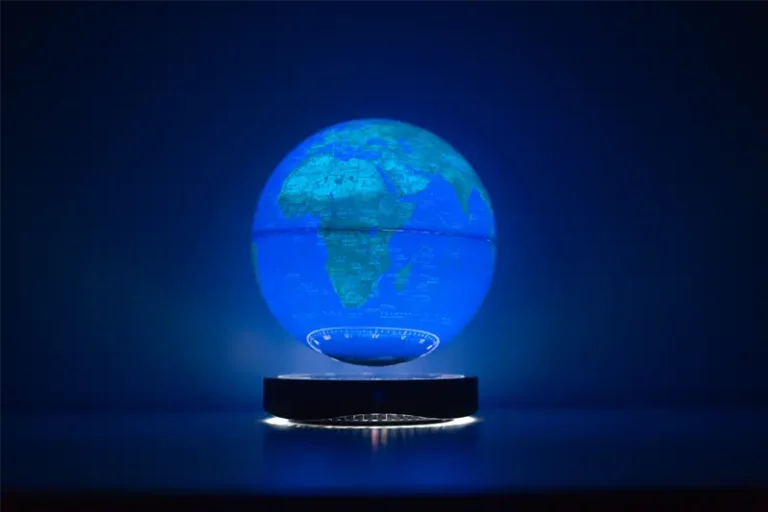
浮动显示器支架可以承受多少重量? 负载能力及测试指南
在规划动态零售展示时,确定现实世界的浮动展示架负载能力是最关键的技术计算. 虽然营销头条经常引用最高暂停数字, 结构稳定性取决于重心几何形状, 偏心力臂, 和连续工作温度. 了解这些物理边界可确保完美的商业部署.
在商业视觉营销中, placing an overweight or off-center item on a magnetic suspension base causes immediate sensor saturation, radial instability, and coil overheating. Store designers and procurement specialists must understand how weight limits correlate with levitation height, dynamic disturbance thresholds, and long-term thermal endurance under continuous 24/7 零售经营.
1. Physics of Magnetic Suspension Payload Boundaries
Electromagnetic levitation relies on dynamic equilibrium between permanent magnetic repulsion, gravitational downward force, and active electromagnetic correction. As payload mass increases, electromagnetic coils must deliver higher current density to maintain the target air gap. This relationship creates an inverse tradeoff between payload capacity and achievable levitation clearance.
Under static bench testing conditions (rigid acrylic fixture, center of gravity aligned within 2 mm of the vertical magnetic axis), the floating display stand load capacity demonstrates continuous levitation from 100 至 2,000 g with coil temperature rise stabilized below 35 K. Exceeding rated weight thresholds forces control loops beyond linear regulation zones.

2. Center of Gravity and Eccentric Moment Arm Constraints
In retail applications, products rarely distribute mass as perfect symmetrical cylinders. Tall perfume bottles, angular luxury footwear, and asymmetric consumer electronics introduce severe eccentric tipping moments. When the center of gravity shifts away from the magnetic centerline, radial correction coils must work continuously to resist angular tilt.
Under eccentric loading conditions (offset moment arm of 15 mm at 500 g load), radial restoring force requires dynamic current adjustment up to 1.8 A to be validated in thermal endurance testing. As the center-of-gravity height increases, the allowable horizontal offset decreases proportionally to prevent rotational destabilization.
| Display Class | Rated Payload Range | Nominal Air Gap | Max CG Height Offset | Continuous Power Draw |
|---|---|---|---|---|
| Compact Jewelry / Cosmetics | 100 克至 350 克 | 18 mm to 22 毫米 | 最多 45 mm height / 10 mm radial | 4.5 W to 7.0 瓦 |
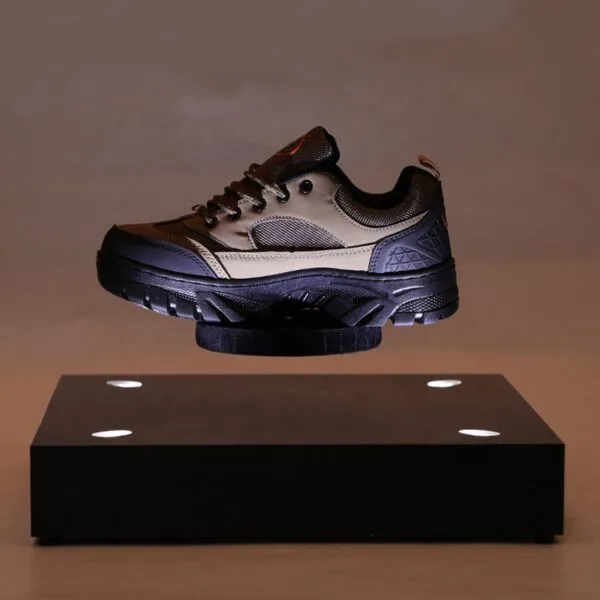
| Footwear / Luxury Leatherware | 400 克至 800 克 | 14 mm to 18 毫米 | 最多 80 mm height / 15 mm radial | 8.0 W to 12.0 瓦 |
| Premium Spirits / 电子产品 | 900 克至 1,500 克 | 12 mm to 15 毫米 | 最多 120 mm height / 12 mm radial | 14.0 W to 18.5 瓦 |
| Heavy-Duty Commercial Showcase | 1,600 克至 2,000 克+ | 10 mm to 14 毫米 | 最多 150 mm height / 8 mm radial | 20.0 W to 26.0 瓦 |
3. Thermal Performance Under Heavy Continuous Loading
Sustaining high-capacity levitation generates substantial Joule heating within internal copper coil windings. 在一个 2 kg heavy-duty commercial display, driving high correction currents without adequate thermal dissipation leads to resistance increases, efficiency drops, and eventual thermal protection cutoffs during store operating hours.
Under 72-hour continuous thermal stress conditions (40°C chamber ambient, rated 2 kg display payload), baseline magnetic field attenuation remains below 1.5%, ensuring long-term gap stability. Professional manufacturers incorporate custom extruded aluminum heatsinks and intelligent current modulation to maintain stable coil temperatures.

4. Dynamic Disturbance and Vibration Resilience
Retail environments subject floating platforms to continuous ambient disturbances including foot traffic vibrations, closing display cases, and casual customer touches. A robust suspension base must possess sufficient restoring force margins to re-stabilize the floating object without causing collision or drop events.
To evaluate these dynamics, explore our commercial 浮动展示架 product line, review our bespoke engineering on our custom case gallery, and learn about our certified production standards at 肇庆固伟电子.
Quality management protocols defined by International Organization for Standardization (国际标准化组织) emphasize rigorous stress testing for electromechanical assemblies. Implementing systematic load-margin testing protects brand reputation across global commercial rollouts.
5. Buyer Verification Checklist for Weight Capacity Validation
When auditing prospective manufacturing partners for high-capacity magnetic levitation display platforms, procurement specialists and technical visual merchandisers should systematically verify the following critical engineering data points:
- True Rated vs Peak Load: Confirm whether quoted weight capacity represents continuous 24/7 duty rating or short-duration bench capability.
- Center-of-Gravity Test Curves: Request documented stability boundary charts showing allowable vertical and horizontal mass offsets.
- Thermal Chamber Logs: Review full-load temperature logs verifying that base surface temperatures remain within safe commercial limits.
- Fail-Safe Power Interruption: Validate automatic retention response times when power is abruptly disconnected under maximum payload.
- Acoustic Emission Benchmarks: Ensure the drive electronics operate silently under full rated weight without PWM switching whine.
- Custom Sampling Capability: Confirm factory ability to produce weighted dummy prototypes tailored to your exact merchandise geometry.
6. 常见问题解答
Q1: What is the maximum weight a commercial floating display stand can support?
Standard commercial modules support 100 克至 1,000 克, while heavy-duty custom engineered platforms reliably float payloads up to 2,000 克 (2 千克) 及以上.
Q2: Why does an off-center product tilt or fall off the floating base?
Off-center mass creates an eccentric moment arm that exceeds the radial magnetic restoring force, causing the control loop to saturate and lose equilibrium.
第三季度: How does increasing payload weight affect the levitation gap?
Heavier objects require higher magnetic holding force, which generally reduces the operating air gap by 2 mm to 5 mm compared to lighter loads.
Q4: Can a heavy floating display operate in an enclosed glass vitrine?
是的, provided the cabinetry includes passive ventilation slots to dissipate heat generated by continuous high-current coil excitation.
Engineer Your High-Capacity Floating Display
Zhaoqing Youjia Electronic (穆奥奇 / 古德韦勒) engineers and manufactures high-precision magnetic levitation platforms capable of supporting payloads from 100 至 2 公斤+. 和 30+ 多年制造经验, 27,000 m² of factory infrastructure, 和 100+ 专利, we provide comprehensive OEM/ODM solutions and FREE DESIGN prototyping for global retail leaders.
Send your product weight specifications and display concepts to 凯西@moocci.com, submit project requirements on our contact page, or discuss your application via WhatsApp (+86 134 5018 0012).