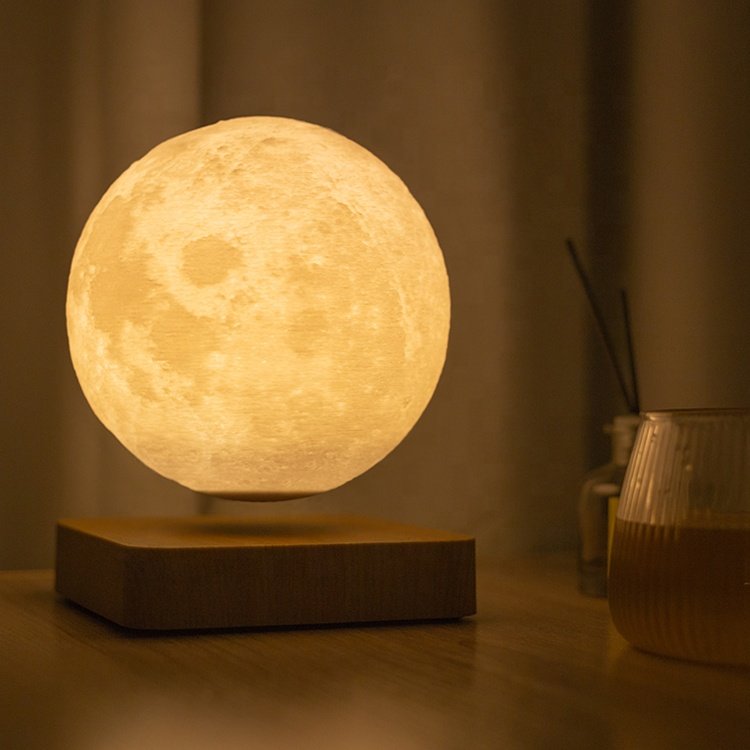
자기 부상 모듈 공급업체에 대한 RFQ에는 무엇이 포함되어야 합니까??
공급업체는 카탈로그 사진이 포함된 플로팅 모듈 요청에 응답하면서도 통합 위험을 정의되지 않은 상태로 둘 수 있습니다.. magnetic levitation module supplier requirements should therefore convert the buyer’s product idea into a measurable RFQ covering payload, 기하학, 통제 수단, 보호, 품질 증거, 가격을 책정하지 않고 상업적인 질문을 할 수 있습니다., 모크, 전압, or delivery promise.

Which Technical Fields Should Appear on Page One of the RFQ?
Put the product definition first: application, payload mass, three-dimensional envelope, 무게중심, 오프셋, target gap, orientation, 회전, and visible clearance. If the object is a retail product, include the value-sensitive surfaces and the landing condition that must prevent uncontrolled contact.
Add the operating profile next. State expected runtime, disturbance sources, installation environment, enclosure material, maintenance access, wireless-power requirement, and whether the object must return to levitation after power is restored.
The RFQ should distinguish a confirmed input from a supplier proposal. 예를 들어, a 12–20 mm gap can be a target range for selected Goodwell configurations, but the supplier still has to validate the value against the final load, 무게중심, and module family.
| RFQ section | Buyer supplies | Supplier returns |
|---|---|---|
| Payload | Mass, 치수, 무게중심 | Feasible load boundary and test condition |
| Geometry | 갭, 오프셋, datum, clearance | Module and mounting recommendation |
| 제어 | Disturbance and acceptance limit | Control scope and validation method |
| Protection | Required landing and restart state | Power-loss test and reset procedure |
| Commercial | Target market and quantity | 가격, 모크, 리드타임, and validity |
How Should a Buyer Demand Evidence Instead of Marketing Claims?
Ask the supplier to attach a configuration datasheet that identifies the module, 컨트롤러 개정, 치수, interfaces, 갭, load range, 그리고 선언된 운영 한계. A generic brochure may establish capability context, but it is not evidence that the chosen assembly supports the buyer’s payload.
For each material claim, request the corresponding test condition and result basis. The record should state the payload, 무게중심, 오프셋, 갭, 방해, 실행 시간, temperature, power-loss method, and acceptance criterion, or clearly mark the field as to be validated.
Do not accept a single demonstration video as a stability report. A valid comparison uses repeatable conditions and identifies whether the object remained centered, recovered from disturbance, landed safely, and restarted without manual repositioning.

What Quality and Compliance Questions Belong in the Supplier Response?
Ask how the supplier identifies production revisions and how the approved sample is compared with production units. The buyer should receive a pre-shipment inspection sample or checklist that covers the same payload, 갭, alignment, power-loss, appearance, and packaging conditions agreed during approval.
The knowledge base identifies Goodwell as ZHAOQING GOODWELL ELECTRONICS COMPANY LIMITED and lists public Patent & Certificate and Product Patent pages. These pages can support an initial supplier review, but buyers should request the exact document applicable to the selected product instead of treating a general patent count as a product certificate.
Commercial terms must remain explicit and open. Ask the supplier to return MOQ, unit price, sample cost, delivery estimate, packaging basis, warranty scope, and payment terms for the stated configuration; none of those values should be fabricated in the educational article or RFQ template.
- Require the exact module and controller revision
- Request loaded gap, center-of-gravity, 오프셋, and disturbance evidence
- Separate public capability claims from configuration-specific test records
- Ask for production QC, pre-shipment checks, and packaging evidence
- Request commercial terms for the defined configuration
- Record open fields as to be validated before purchase-order approval
How Can the RFQ Protect the Buyer During Sampling and Scale-Up?
Write acceptance criteria before the sample arrives. Include the maximum permitted displacement, visible wobble, temperature observation, power-loss landing behavior, reset process, cosmetic tolerance, and the documents required before a production release.
Use the same identifiers throughout the RFQ, 그림, sample, test record, and purchase order. If the supplier changes the coil, 제어 장치, 울로 둘러싼 땅, payload attachment, or mounting datum, the buyer should treat the change as a new validation event rather than a minor substitution.
For the initial hardware context, review the Magnetic Levitation Module page and the 특허 & Certificate page. Send the completed requirement sheet through 연락하다 / 자유로운 디자인 and use the Product range only as application context, not as a substitute for an RFQ response.
공급업체 감사 체크리스트: 5 Documents to Request Before Signing a Purchase Order
- Configuration datasheet: verifies module identity, 갭, load boundary, 치수, 인터페이스, and operating limits.
- Loaded stability and disturbance report: records payload, 무게중심, 오프셋, 갭, 실행 시간, 방해, and acceptance result.
- Power-loss and restart report: confirms the controlled landing state, reset sequence, and repeated recovery condition.
- Quality and pre-shipment inspection plan: shows how production units are checked against the approved sample.
- IP and compliance document set: identifies the applicable entity, product documentation, and the records that must be verified for the destination market.
자주하는 질문: Magnetic Levitation Module Supplier Requirements
큐: What are the first requirements to send to a magnetic levitation module supplier?
Send the payload drawing, mass, 무게중심, 오프셋, target gap, duty cycle, 방해, 울로 둘러싼 땅, power interface, and safe-state requirement. These fields allow a supplier to evaluate the actual configuration rather than respond to a generic request for a floating module.
큐: Should an RFQ state MOQ, price, and delivery time?
예, ask the supplier to quote those commercial conditions, but do not insert an assumed value into the specification. The RFQ should separate confirmed technical requirements from commercial fields that the supplier must return for the selected configuration.
큐: Which supplier documents should be checked before sampling?
Request a configuration datasheet, test records for load and power loss, quality inspection evidence, intellectual-property documentation, and a sample approval procedure. Verify that every document identifies the same module, 제어 장치, 유효 탑재량, and revision.
큐: How can a buyer compare two suppliers fairly?
Use one RFQ template and require both suppliers to report the same load, 갭, center-of-gravity, 방해, 실행 시간, and acceptance fields. A comparable response is more useful than a higher nominal weight or a more attractive demonstration video.
Send the completed RFQ with payload drawing, mass, 무게중심, 갭, 방해, 실행 시간, and desired safe state to Goodwell Contact / 자유로운 디자인. 이메일 [email protected] and ask the team to separate confirmed data from fields to be validated.
For general physics background, consult OpenStax Physics. The authority reference does not validate a supplier’s product claim, so the RFQ must still require configuration-specific evidence.